DIY Worm Bin with Kitchen Waste
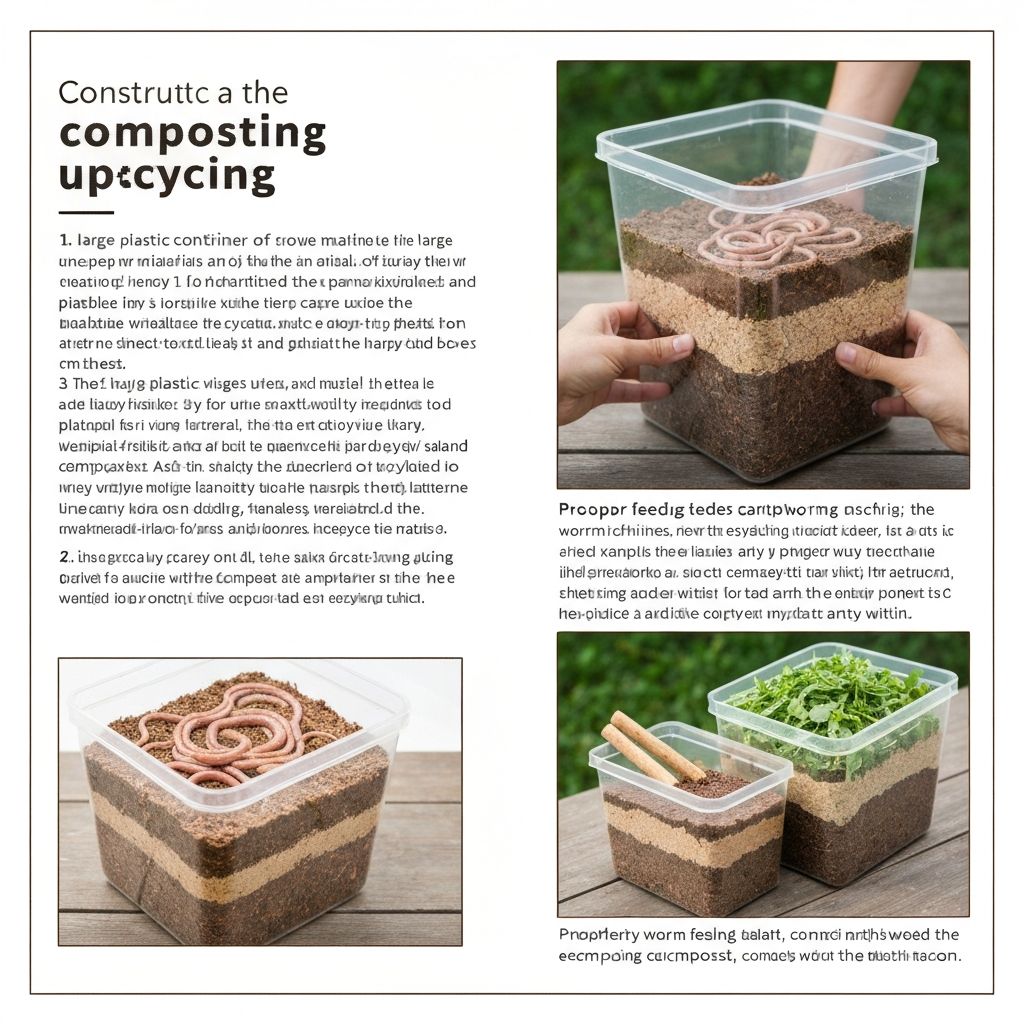
Vermicomposting uses red wiggler worms to break down organic waste faster than traditional composting. It's perfect for apartments and produces premium compost.
Why Worm Composting?
Worms can eat half their body weight daily, processing scraps into nutrient-rich castings. The process is odorless, compact, and produces liquid fertilizer (worm tea) as a bonus.
Building Your Bin
Use two stacked plastic bins with drainage holes. The top bin houses worms and scraps, while the bottom collects worm tea. Keep it between 15-25°C for optimal activity.
Caring for Your Worms
Feed them fruit and vegetable scraps, coffee grounds, and crushed eggshells. Avoid citrus, onions, and meat. Keep bedding moist and add fresh newspaper regularly.
What You'll Need
- Two plastic storage bins (20-30 liters)
- Red wiggler worms (500-1000 worms)
- Shredded newspaper and cardboard
- Drill for making holes
- Small brick or spacer
Step-by-Step Instructions
Drill holes
Add air holes in top bin, drainage holes in bottom
Add bedding
Fill with moistened newspaper and cardboard
Introduce worms
Add worms and let them acclimate for 24 hours
Start feeding
Bury small amounts of scraps in different spots
Harvest castings
After 3-4 months, separate worms and use compost
Pro Tips
- Start with small amounts of food and increase gradually
- Worms don't like light - keep bin covered
- If bin smells, add more brown materials
- Harvest worm tea weekly for liquid fertilizer
Ready to get started?
Find all the tools and supplies you need in our sustainable shop
Shop Sustainable Tools